
Hajj Clinical Rotation at Bekasi Embarkation, FK UIN Jakarta Junior Doctors Strengthen Pilgrims’ Healthcare Competence
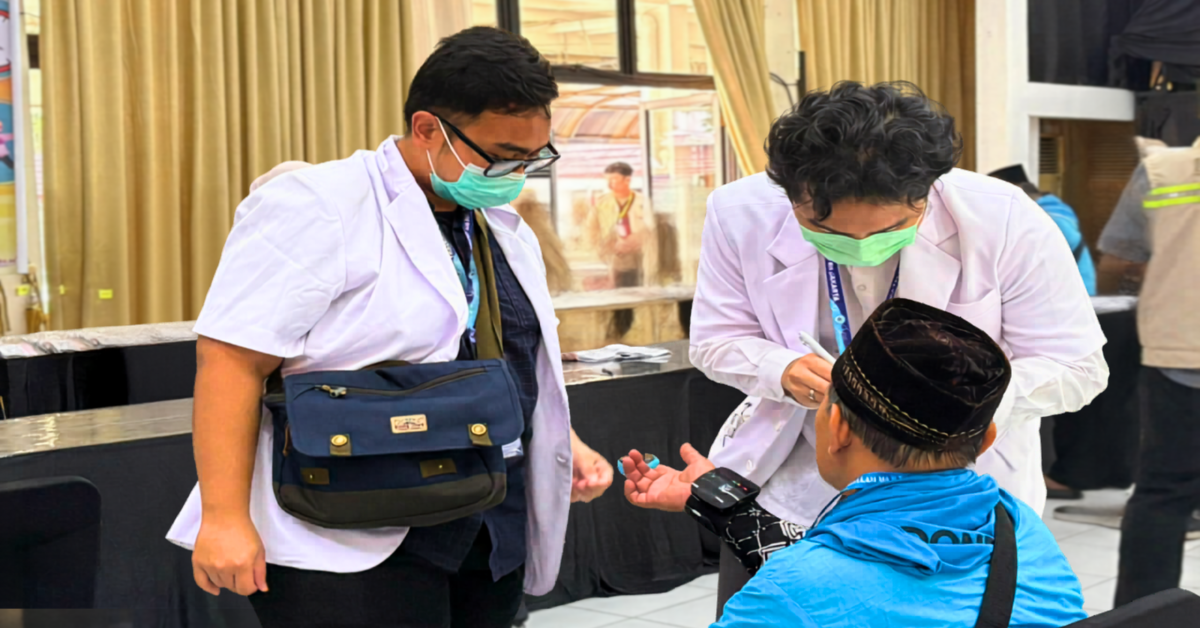
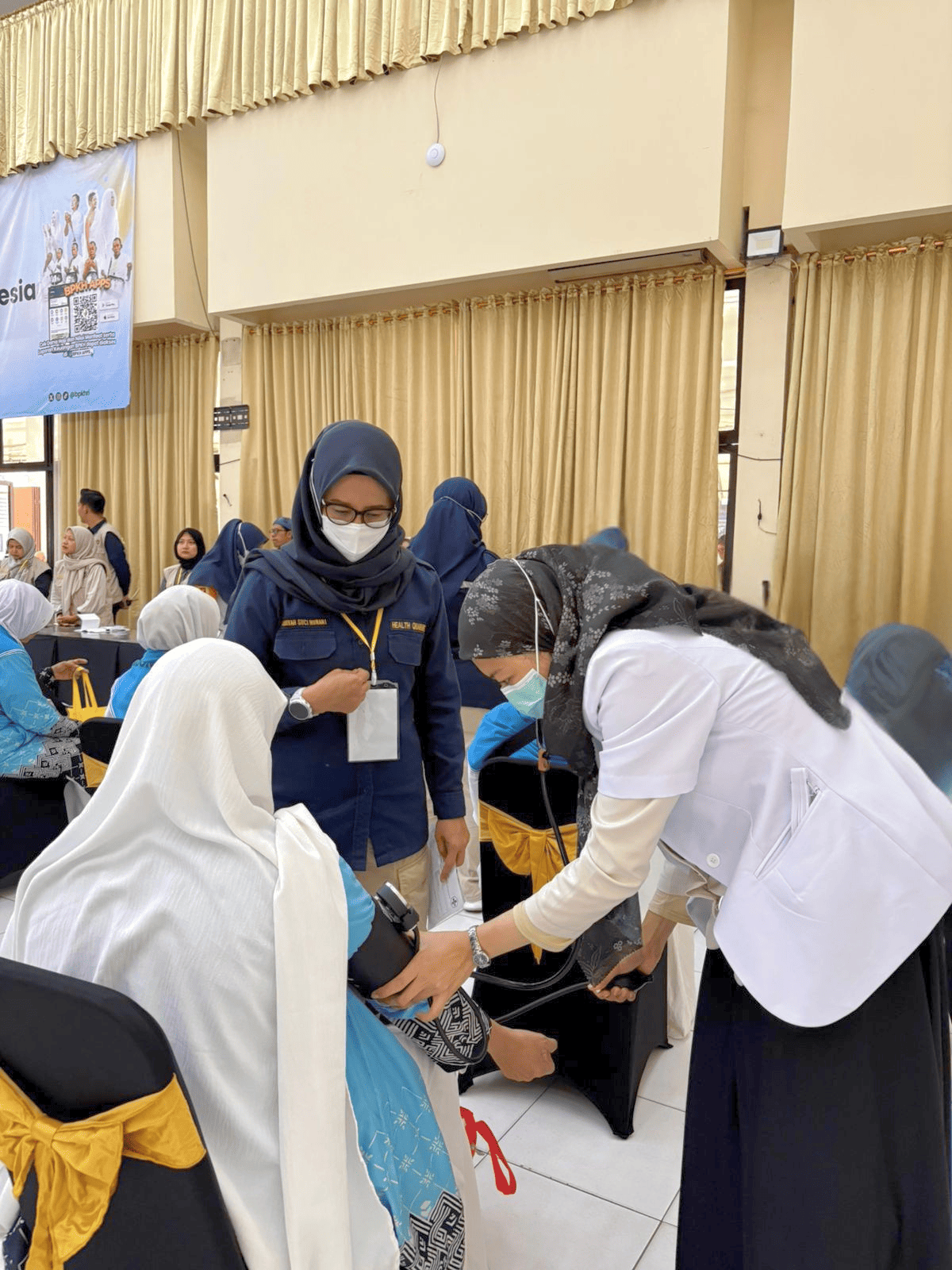
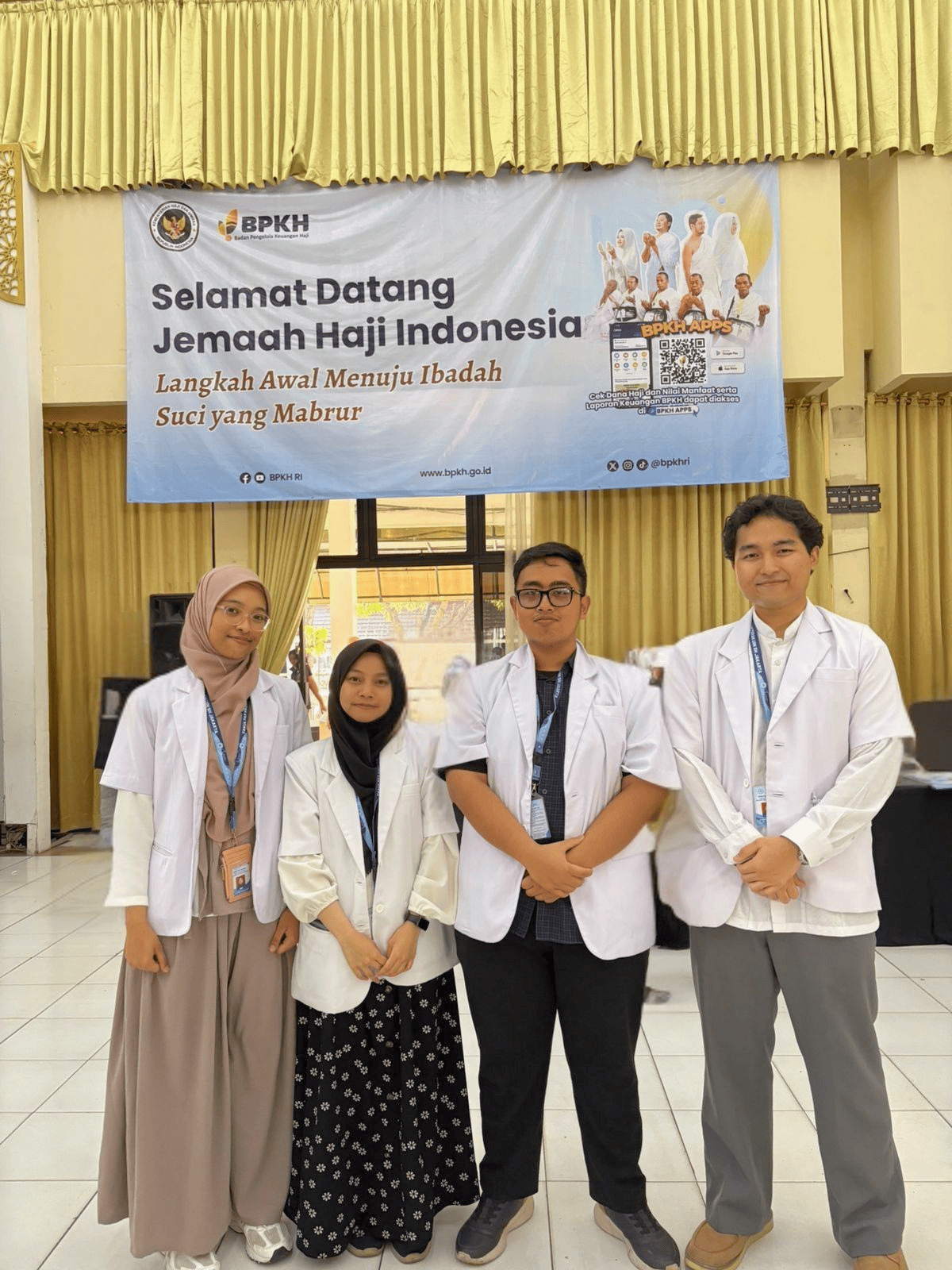
Bekasi, FK Online News – Medical students from the Faculty of Medicine, UIN Syarif Hidayatullah Jakarta, are undertaking a Hajj clinical rotation at the Balai Kekarantinaan Kesehatan (BKK) Hajj Dormitory in Bekasi as part of their field-based learning in providing healthcare services for Hajj pilgrims, on Sunday (May 3, 2026).
This rotation is a collaboration between the Faculty of Medicine UIN Jakarta and the Health Quarantine Office, aimed at equipping students with practical understanding of the Hajj healthcare system, including screening processes, medical examinations, and determining pilgrims’ fitness for departure.
The Head of BKK Class I Bandung, Sedya Dwisangka, explained that this activity plays an important role in preparing students to face real-world situations.
“This is a collaboration between FK UIN and BKK. One of the goals is to prepare medical students to be exposed to activities at the Hajj embarkation,” he stated.
He also added that although most cases encountered at the embarkation have undergone prior screening in their regions, students still gain valuable experience in understanding an integrated healthcare system.
During the program, students are directly involved in various service processes, from conducting medical examinations of pilgrims to analyzing patients’ conditions. This provides opportunities to sharpen clinical skills and develop quick and accurate decision-making abilities.
One of the junior doctors from FK UIN Jakarta, Selvi Haura Zafirah, shared that the experience at the Hajj embarkation offered valuable lessons beyond classroom learning.
“We gained a very valuable opportunity in this Hajj rotation, working alongside Hajj management staff and doctors who were very supportive,” she said.
She also noted that during the program, students had the opportunity to handle hundreds of patients with various health conditions.
“There is so much we can learn from the cases we encountered, especially in conducting physical examinations, analyzing results, and determining whether patients can proceed to the next stage or require further treatment,” she explained.
Furthermore, Selvi emphasized that the experience also trains students to provide comprehensive healthcare services.
“We hope to be able to deliver patient care in curative, preventive, and promotive aspects, while remaining responsive and critical in handling various patient conditions,” she added.
Through this Hajj clinical rotation, FK UIN Jakarta students are expected not only to understand clinical aspects but also to view healthcare services in a broader context, including large-scale health management for pilgrims. This program serves as an essential step in shaping future doctors who are professional, adaptive, and ready to face diverse healthcare challenges.
(AAS/NIS)