
UIN Jakarta Hospital Pulmonologist Highlights the Dangers of Forest and Land Fire Smoke
FK, Berita FK UIN Online – Widespread forest and land fires (karhutla) have caused serious adverse effects on communities across Indonesia. Peatland fires have been particularly severe in Kalimantan, followed by Sumatra and Papua. Forest fires in mountainous areas of Java have also contributed to a heightened risk of respiratory illnesses. Lasting approximately four to seven months, these fires continue to raise public health concerns due to the various diseases associated with smoke exposure.
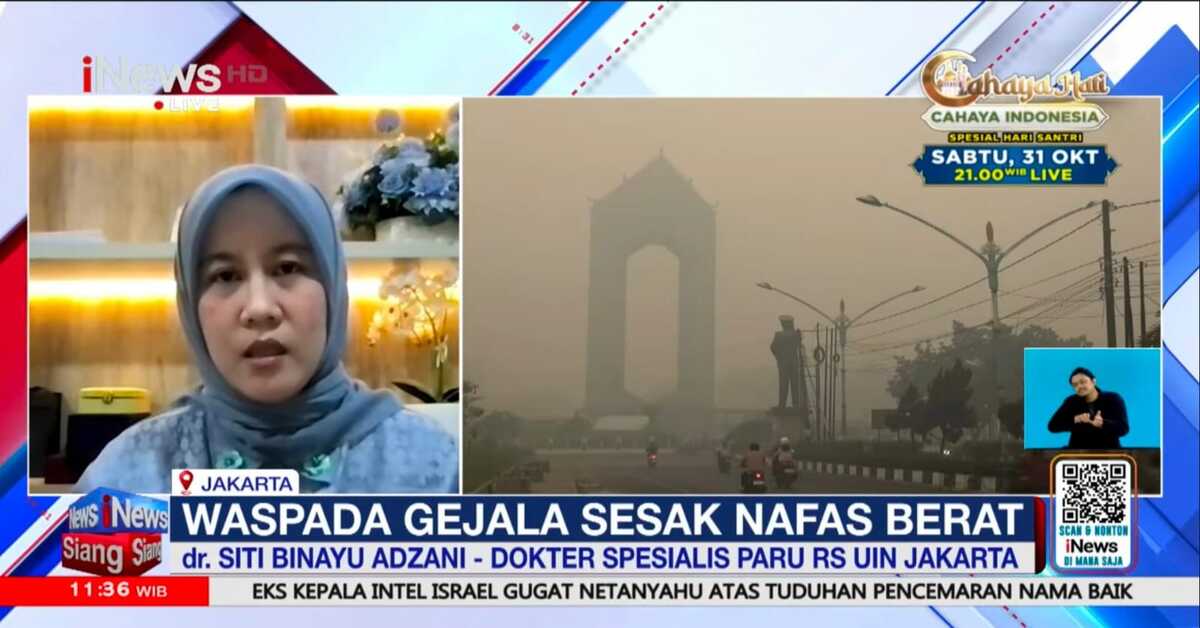
Pulmonologist at UIN Syarif Hidayatullah Jakarta Hospital and alumna of the Faculty of Medicine (FK), UIN Jakarta, dr. Siti Binayu Adzani, Sp.P., shared insights into the potential health risks of forest and land fire smoke, ranging from the most severe conditions to those that can easily affect exposed individuals.
As reported by iNews Siang, dr. Siti Binayu Adzani explained that forest fire smoke poses a significant threat to lung health, causing both short-term and long-term effects. Smoke exposure can trigger inflammation and narrowing of the airways. Other potential health complications include asthma-like symptoms, airway obstruction, pneumonia, and acute respiratory distress syndrome (ARDS).
She further explained that the severity of smoke exposure depends on an individual's condition, the duration of exposure, and the concentration of smoke. “It depends on the duration of exposure and the concentration level. Vulnerable individuals, particularly older adults, pregnant women, and children, are at especially high risk. Prolonged exposure to high concentrations of smoke can lead to severe symptoms and even death,” she explained.
Explaining the issue further, dr. Siti Binayu noted that smoke contains ultrafine particles that are invisible to the naked eye. These particles can easily penetrate deep into the lungs, reaching the alveoli and interfering with oxygen exchange. “Those affected may experience headaches, fainting, and even loss of consciousness in severe cases,” she explained.
She also outlined several warning signs of severe exposure to ultrafine smoke particles. “The first is worsening shortness of breath, which may be accompanied by wheezing or loss of consciousness. Other signs include the use of additional respiratory muscles to breathe, a persistent cough that does not improve or produces excessive phlegm, and bluish discoloration of the lips or fingers. This condition, known as cyanosis, indicates impaired oxygenation and requires immediate medical attention at a hospital,” she stated.
Concluding her explanation of the dangers of forest and land fire smoke, dr. Siti Binayu urged the public to take preventive measures. Although avoiding smoke exposure entirely can be difficult, reducing outdoor activities and preparing a clean indoor space to stay in can help minimize the risks. She also advised avoiding additional sources of smoke indoors, including conventional and electronic cigarettes, as part of these preventive efforts.
(MA/NIS)